Consumer technology · Retention · Monetization
Turning a Seasonal Relationship Into an Always-On One
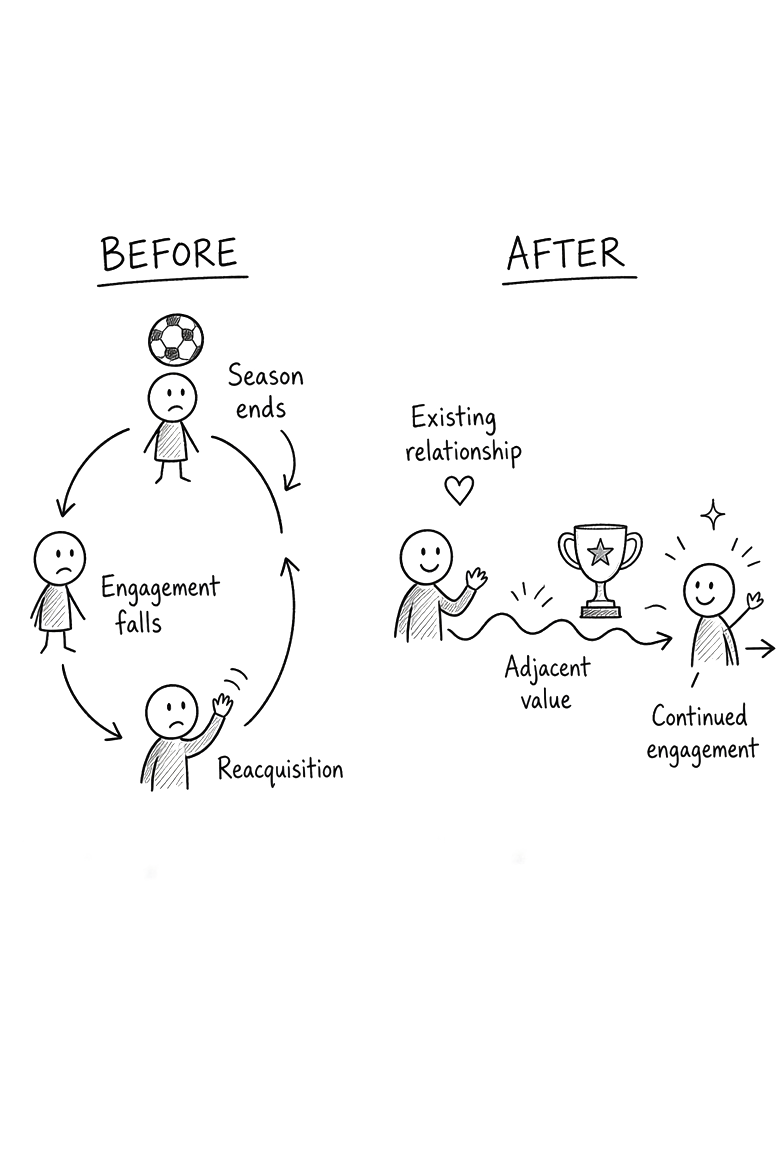
Every season brought the same players back to the starting line.
I worked on the same fantasy sports platform, where engagement was heavily concentrated around that same recurring cricket season.
When the season ended, engagement dropped off, and every new season meant winning the same players back again: season, disengagement, reacquisition, season.
When the season ended, engagement dropped off, and every new season meant winning the same players back again: season, disengagement, reacquisition, season.
What else could the relationship be worth?
Could the existing player relationship create value outside the original game and season?
The opportunity was bigger than a cross-sell.
The platform had a second, always-on game with a very different engagement pattern than the seasonal one.
Every earlier cross-sell attempt asked players to leave the app they were already in, download a second one, and start over with a new balance.
That was real friction, and a natural place for interest to die.
Fixing it meant infrastructure, not a better pitch: the two experiences needed to feel like one relationship, not two products competing for the same attention.
How do you make the next experience feel natural?
The team rebuilt the shared experience so a player could move between both games without leaving the app or re-depositing.
New players to the second game got matched to easier tables instead of facing experienced regulars.
None of this worked on the first attempt: early versions underperformed, and parts of the experience had to be rebuilt and retested.
That cycle repeated over a multi-year timeline before the model held.
What changed when the relationship extended beyond one game?
Cross-product engagement grew several-fold from where it started, and what used to be a dead season became an active one.
The more durable change was that the business started treating an existing seasonal relationship as a source of value beyond its original game and season.
That changed the operating question from bringing a player back next season to what else that relationship could create.
The takeaway
The best retention systems change what happens by default.
A campaign can create a temporary behavior change. Infrastructure can change the relationship itself.
Instead of asking what campaign can bring a player back, the better question is what should happen next for that player if no campaign gets sent at all.
Company names and role titles are public through my résumé and LinkedIn, so they're named directly. Product names, campaign details, and exact internal figures stay out, out of respect for confidentiality obligations to past employers. The reasoning here is real. The implementation detail underneath it isn't.