Consumer technology · Growth · Performance marketing
Improving Acquisition Efficiency When the Clock Is Fixed
The opportunity was big. The window was short.
I worked on a fantasy sports platform with a concentrated seasonal demand window, tied to India's biggest cricket season.
Competition intensified exactly when the business needed to scale, with every major player bidding for the same users at once.
Once the season began, the plan had to perform from day one.
There was no room to learn and adjust mid-window.
The opportunity was clear. The challenge was timing.
Where could we make acquisition more effective, beyond media efficiency?
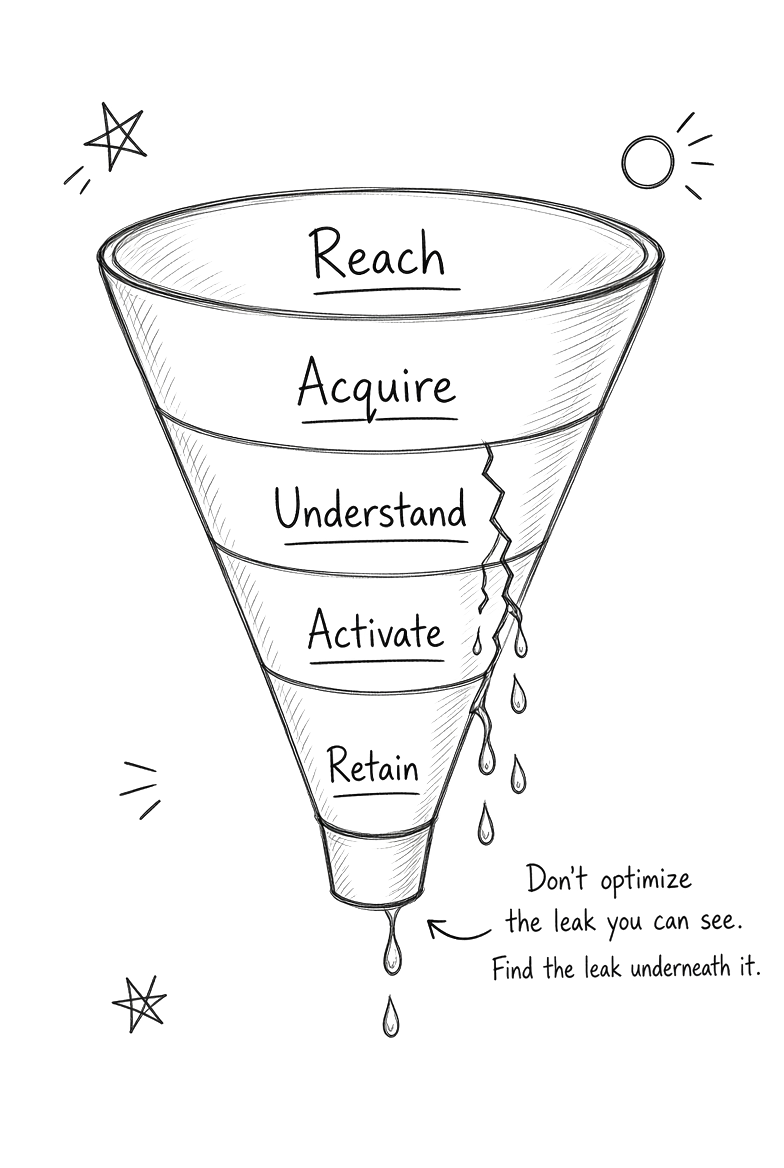
I looked at the full path from acquisition through product adoption, instead of treating media performance as a standalone problem.
That reframed the question from buying users more cheaply to making the whole journey work harder.
Price wasn't the real problem.
Price wasn't what was stopping people from trying the app. Trust was: a newer entrant was being measured against incumbents nobody had been burned by yet, at the exact moment someone was deciding whether to risk real money on a new app.
That shifted the problem from being cheaper to being credible.
It also meant the app store experience and how the app ran on lower-end devices were part of the acquisition problem, since a meaningful share of the audience skewed toward budget phones.
What could we improve at the same time?
Several parts of the funnel had to move at once, because the season gave no room for a slower, sequential approach.
Creative shifted toward credibility over discounting, and onboarding got simplified around getting a new user to a decision faster.
I made the case to the tech team to prioritize device performance ahead of the season, even though that work sat outside the growth team.
What changed when we treated acquisition as a system?
Blended CAC came down by roughly a quarter to a third during the season, without slowing the business at the scale it needed to operate.
Peak season reactivation improved by a similar margin.
The bigger shift was that growth stopped being treated as a media buying problem and became a full journey problem, owned jointly by product, engineering, and marketing.
The takeaway
What does a short growth window change?
A short growth window changes how you experiment.
In a longer running product, you can isolate every variable and move one at a time.
When the window is short, the cost of waiting for a clean test can be higher than the cost of imperfect parallel execution.
Company names and role titles are public through my résumé and LinkedIn, so they're named directly. Product names, campaign details, and exact internal figures stay out, out of respect for confidentiality obligations to past employers. The reasoning here is real. The implementation detail underneath it isn't.